Construction quotes: preparing an estimate faster with AI
How an AI agent connected to your drawings, prices and ERP speeds up quote preparation, without taking the final price out of the estimator’s hands.

Alexandre Sauvageau, co-founder of Cogio
, updated October 30, 2026
Where the time in a quote really goes
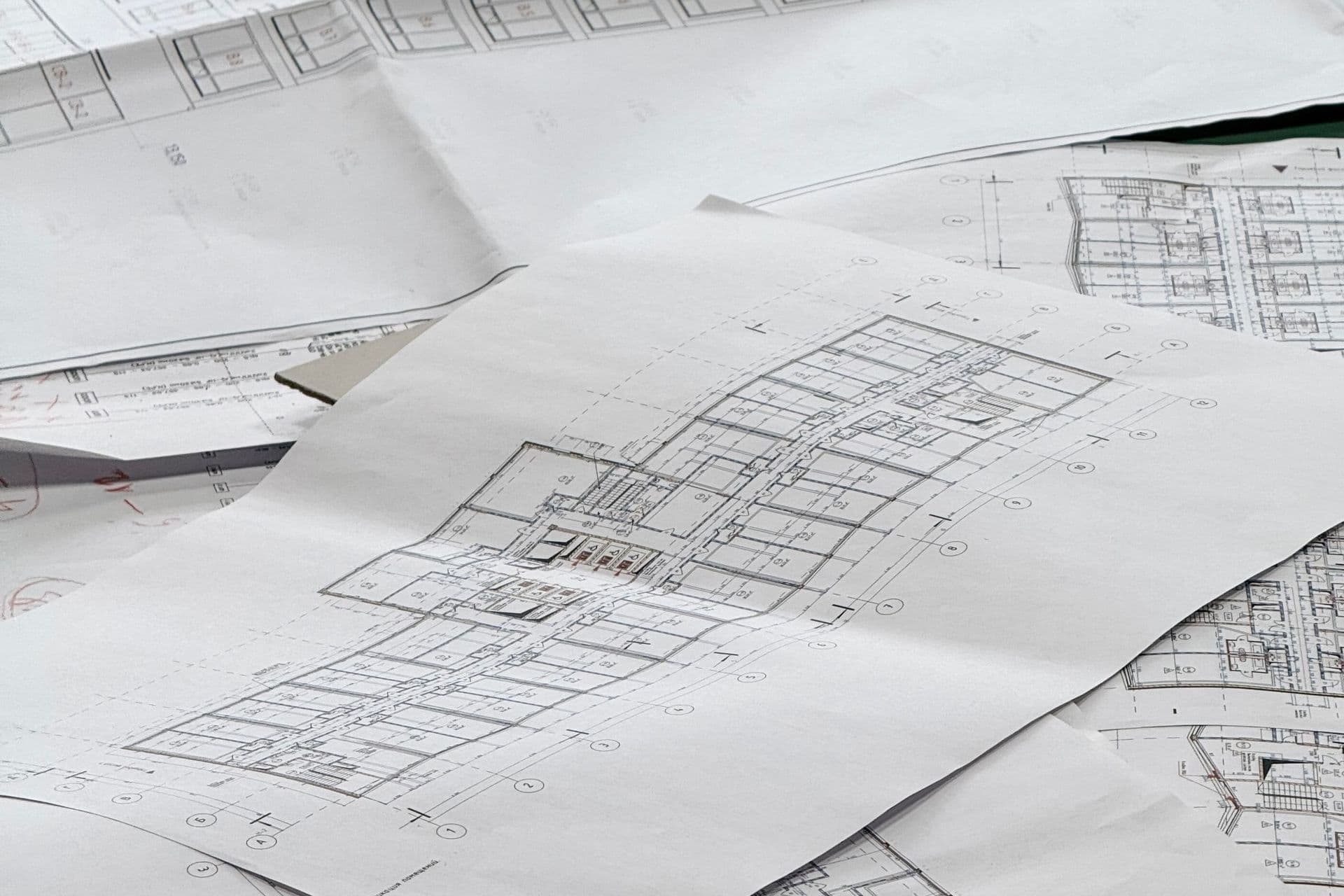
Ask an estimator what takes the most time and the answer is rarely the arithmetic. It is the tender that arrived as twelve files, the structural drawing that has to be read again to count the members, the steel price that needs rechecking with the supplier, last year’s similar job that is somewhere on the network, and then the layout of the quote itself.
That groundwork takes as much skill as pricing, just a different kind: patience and memory. That is exactly where an AI agent helps. It does not replace the estimator’s judgment. It spares the estimator the digging.
The cost of all that digging never shows up in the financial statements. It shows up in the tenders you pass on for lack of time, and in quotes that go out and are then forgotten. At Les Industries Romy, the case study notes that 16 quotes had been sitting for more than 90 days, some for 900, when the work began.
What the agent does, step by step
A quoting agent is not one more estimating package. It is an assistant that works inside your existing tools (email, shared folders, ERP, price list) and chains together the tasks an assistant would do if they had all the time in the world.
- Intake: it reads the request for pricing or the tender received by email, files the attachments and opens a job under the right number.
- Take-off: it pulls from the documents what pricing needs (quantities, materials, special requirements, deadlines) and flags what is missing.
- Memory: it finds comparable quotes the company has already sent, with the prices offered and how the job turned out.
- Draft: it prepares the bill of quantities and the quote in your template, from your current prices and your own calculation rules.
- Review: it leaves everything as a draft. Nothing goes to the client without approval.
- Follow-up: once the quote is sent, it reminds you when to follow up with the client and drafts the message ahead of time.
The price stays a human decision
An estimator’s real value lies in what no document says: does this client pay on time, will this site be hard to reach, does the shop have room in March? The agent does not have that knowledge and should not pretend to.
That is why we put the limit in writing on every project: a price, a schedule or a commitment to a client is always approved by a person. At Romy the rule is built into the system itself: an email to a client is saved as a draft and a price waits for approval. That limit is not a weakness of the tool. It is what lets you trust it with everything else without watching it every minute.
The same principle applies to errors. A language model can misread a dimension or mix up two drawing revisions. Human review is not a formality: it is the last line of defence, and the agent should make its work easy to check by citing the source of every quantity.
A price, a schedule, a commitment to a client: always a human.
The Les Industries Romy case
Les Industries Romy fabricates and installs steel structures in Granby for industrial, institutional and construction clients. When U.S. tariffs cut demand from its regular customers, the company needed to prospect more. Yet its three project managers were spending much of their week on paperwork.
The system in place includes eight specialized agents, among them a quoting agent and a drafting agent that prepares shop drawings in DXF for the drafter to review. Everything runs on the company’s own server: drawings, prices and client files never leave the shop.
The result, in the owner’s words: “we now send roughly two to three times as many quotes.” We report that figure as it appears in his testimonial. It is his own observation, not an independent measurement, and we draw no average from it for other companies. The hours freed up are broken down in our article on how many hours AI really frees up in an SME.
Why your prices should stay with you
A quote archive is the complete history of your prices, your margins and your clients. Few pieces of data in a construction business are more commercially sensitive. Pouring them into a consumer tool whose host and retention policy you do not know is a bet few owners would make if they thought about it for two minutes.
Sovereign AI settles the question through architecture: the model runs on your server or with a host in your region whose jurisdiction you know. Your clients’ personal information stays governed by Quebec’s Law 25, and your prices stay yours. Our article on the CLOUD Act explains why the address of the data centre is not enough.
Where to start
Three conditions separate a useful agent from a gadget. First, current prices somewhere: a list, an ERP, even a well-kept spreadsheet. Second, past quotes that can be found, ideally with their outcome (won, lost, no answer). Third, a stable quote template the agent can fill in.
If those three exist, a first quoting agent can be running within a few weeks on one specific type of job before it is widened. If not, the first job is to put them in order, and our data readiness self-assessment helps measure the gap.
To see what this work looks like for fabricators and contractors, visit our manufacturing and construction page, or get in touch to talk about your quotes.
Frequently asked questions
Can an AI agent price a quote on its own?
It can prepare a calculation from your prices and rules, but the final price must be approved by a person. The agent does not know what the estimator knows about the client, the site and the shop’s workload.
Do we need to change our estimating software?
No. The agent works in your existing tools: email, shared folders, ERP and templates. It prepares the work and leaves a draft where you expect it.
Can the agent read drawings?
It can read the text and annotations on drawings, and at Romy an agent prepares DXF shop drawings from sketches. Every quantity taken from a drawing must still be checked by a person before it goes into a price.
How many more quotes can we expect to send?
We do not give an average. The owner of Les Industries Romy says he sends roughly two to three times as many quotes, but that depends on his volume, products and team. Every gain is measured at the client’s site, before and after.
Do our prices and drawings leave the company?
Not with sovereign AI: the model and the data are hosted on your premises or with a host in your region whose jurisdiction is known.
Sources and references
This article is a plain-language summary, accurate as of the date shown. It is not legal, tax or financial advice: for your own situation, consult a qualified professional.
Read next
Strategy
How many hours does AI really free up in an SME? A Granby manufacturer’s numbers
Read
Strategy
AI in a metal fabrication shop: five use cases that pay for themselves
Read
Strategy
Is your data ready for AI? A 10-point self-assessment
Read
A question about your own project?
The discovery call is free and takes half an hour. You leave with an honest read on your situation.
Let’s talk about your project